

For years, travellers chased the same destinations. Santorini. Bali. Queenstown. The Amalfi Coast.
They were beautiful until everyone showed up at once. Crowds, queues, inflated prices, and the same photos replicated a million times. You pay $300 a night for a hotel room and still stand in line for an hour to see a sunset.
The 2026 traveller is done with that. They want something real. A place where a stranger invites you inside for tea without wanting anything in return. A mountain trail that does not require a permit, a queue, or a “premium viewing experience.” A country that has not yet figured out how to turn its culture into a product.
Pakistan is that place right now. And the world is finally waking up to it.
Quick Answers
| Question | Answer |
| Best time North | May to September (Hunza, Skardu, K2) |
| Best time South | October to March (Lahore, Multan, Karachi) |
| Budget (2 weeks) | $400 to 600 budget / $1,200–1,500 mid-range |
| Visa | E-Visa 2.0 near-instant online approval |
| Internet | 5G in Gilgit, Hunza, Skardu. SCOM SIM for remote treks |
| Daily cost | As low as $25–35/day (meals, stay, transport) |
Hospitality That Is Not for Sale

Walk into a village in Gilgit-Baltistan. Sit down near a chai stall. Within minutes, someone will hand you a cup and refuse your money.
This is not a tourism campaign. It is not a government initiative. It is just how people live here.
The concept of mehmaan nawazi honouring your guest runs deep in Pakistani culture, from the mountain villages of the north to the plains of interior Sindh. A guest is not a customer. A guest is a responsibility. You feed them, you shelter them, you make sure they leave happy.
Travellers from Europe and North America who arrive expecting a transactional experience are caught completely off guard. A farmer in Hunza will spend twenty minutes explaining the best hiking route to you, then invite you for lunch, then refuse any payment. A family in Lahore will insist you sit down for dinner after giving you directions on the street.
Most travellers who visit say this is the thing that surprises them most. Not the K2 views. Not the ancient ruins. The people.
“I have travelled to 40 countries. I have never felt as genuinely welcomed anywhere as I did in Pakistan.” Common sentiment across travel forums in 2026
That feeling of being genuinely looked after by strangers is becoming rare in a world where tourism has turned every interaction into a transaction. Pakistan still has it. That alone is worth the flight.
Nature That Has Not Been Packaged Yet

Nepal has Everest but Everest now has traffic jams. You book months in advance, pay thousands in permit fees, and still share the trail with hundreds of other trekkers in matching gear. The mountain is still magnificent. The experience around it is not.
In Pakistan, you can walk to the base of the world’s second-highest mountain without a crowd. No premium tickets. No designated photo spots. No guided tour package you are forced to buy. Just the mountain, the glacier, and silence.
Valleys travellers are discovering in 2026:
- Shimshal Valley Four days from Passu, almost no tourist infrastructure, wild yaks on the trail. One of the most remote inhabited places in Pakistan.
- Neelum Valley Dense forest, fast rivers, and genuinely quiet even in peak season. The kind of green that makes you stop walking just to look.
- Deosai Plains One of the highest plateaus on earth, sitting at 4,114 metres. Carpeted in wildflowers from June through August, with Himalayan brown bears roaming freely.
- Fairy Meadows Direct views of Nanga Parbat, the world’s ninth-highest peak. You can camp here independently without hiring a guide or paying entry fees.
- Naltar Valley Three coloured lakes surrounded by pine forests. Almost zero mass tourism. A place most Pakistani travellers themselves have not visited.
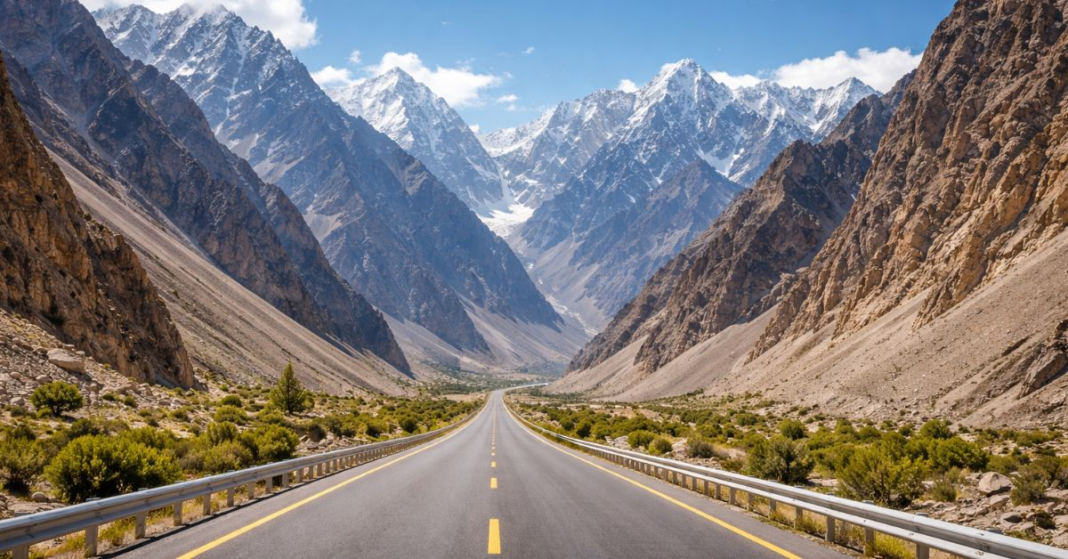
And then there is the Karakoram Highway. Stretching from Islamabad all the way up through the mountains into China, it passes through scenery that takes your breath away every thirty minutes. Gorges so deep the sun only reaches the bottom for a few hours a day. Rivers the colour of glacial milk. Villages clinging to cliffsides. It is one of the great road journeys on earth, and most people still have not heard of it.
The Digital Nomad Problem Solved

Two things kept remote workers away from Pakistan for years: getting in was complicated, and staying connected was unreliable.
E-Visa 2.0 processes applications almost instantly for most nationalities. No embassy visit. No weeks of waiting. No confusing paperwork. You apply online in under fifteen minutes, get approved the same day, and book your flight. The old bureaucratic friction that discouraged people from even trying is gone.
On connectivity Jazz and SCOM have extended 5G coverage to Gilgit, Hunza, and Skardu. You can take a video call from a guesthouse balcony with Rakaposhi in the background. The main towns along the Karakoram Highway have WiFi fast enough to upload content, run client calls, and work a full remote day without issues.
For treks beyond the main towns Gondogoro La, Shimshal, the Hispar Glacier pick up a SCOM SIM in Gilgit before you leave. Coverage thins out in the deep valleys, but for the towns and road stops, connectivity is no longer the problem it used to be.
At $25–35 per day all-in, Pakistan is one of the cheapest countries in Asia for the quality of experience on offer. A digital nomad can live comfortably in Hunza for a month for less than a week in Bali. The numbers simply do not make sense anywhere else.
Pakistan vs. Other Adventure Destinations
| Factor | Pakistan | Nepal | Kyrgyzstan | Georgia |
| Daily budget | $25–35 | $40–55 | $20–30 | $45–65 |
| Crowd level | Low | High | Low | Medium |
| Visa | E-Visa instant | On arrival | Visa-free (many) | Visa-free (many) |
| 5G / internet | Major hubs | Kathmandu only | Limited | Good coverage |
| Top mountain | K2 8,611m | Everest 8,849m | Lenin Peak 7,134m | Mt. Kazbek 5,047m |
| Heritage sites | Mohenjo-daro, Lahore Fort, Taxila | Kathmandu Valley | Silk Road sites | UNESCO churches |
| Hospitality | Exceptional | Good | Strong | Strong |
| Solo female travel | Improving fast | Well established | Good | Good |
When to Go
North Mountains
May to September Hunza · Skardu · Fairy Meadows · Deosai · Naran · Chitral
Roads open, passes clear, wildflowers in full bloom. July and August are peak season in Hunza book guesthouses a few weeks ahead.
South Heritage Cities
October to March Lahore · Multan · Karachi · Mohenjo-daro · Taxila · Rohtas Fort
Cooler temperatures make walking around ancient sites and walled cities far more comfortable. Lahore in December is one of the great urban travel experiences in Asia.
The Safety Question Finally Answered
The old headlines about Pakistan told one story. The travellers who have actually been there in 2025 and 2026 tell a completely different one.
Visitors consistently report feeling safer walking through Pakistani cities and villages than in many parts of Western Europe. The community looks after guests. People notice strangers and check on them. If you look lost, three people will offer to help before you even ask.
This does not mean travelling without awareness. Rural and conservative areas have social norms that matter dressing modestly, being respectful of local customs, avoiding sensitive topics in casual conversation. These are basic courtesies, not restrictions. Any traveller who approaches Pakistan with cultural respect will have a smooth experience.
But the danger narrative that kept travellers away for years does not match what people are actually experiencing on the ground in 2026. The perception gap between the headlines and the reality has never been wider.
The shift is measurable. Travel forums that were once full of “is it safe?” threads now have posts titled “how do I extend my Pakistan visa?” and “what did I miss on my first trip?” That is the real indicator of how the conversation has changed.
Beyond the Mountains What Most Travellers Miss
Everyone comes for the north. Fair enough Karakoram is extraordinary.
But Pakistan is much larger than its mountains, and most first-time visitors leave having seen only a fraction of what the country offers.
Lahore has some of the finest Mughal architecture on earth. The Badshahi Mosque, the Lahore Fort, the Shalimar Gardens these rival anything in Agra or Delhi, and you can walk through them without the crowds. The old walled city is a maze of food streets, craft markets, and centuries-old havelis that takes days to properly explore.
Mohenjo-daro in Sindh is one of the world’s oldest cities over 4,000 years old, contemporary with ancient Egypt and Mesopotamia. Most people have never heard of it. You can visit and have the ruins almost entirely to yourself.
Multan is the city of Sufi shrines. The architecture is stunning, the people are warm, and the food is some of the best in Pakistan. It receives a tiny fraction of the visitors that Lahore gets.
Karachi has a coastline, a food scene, and an energy that surprises almost everyone who visits. It is a massive, complicated city chaotic and fascinating in equal measure.
Most first-time visitors leave Pakistan wishing they had planned three weeks, not two. That is not a complaint. It is the best problem a destination can have.
Frequently Asked Questions
Is Pakistan safe for solo female travellers in 2026?
Yes with context. Female-led tour groups now operate across the northern regions. In cities like Lahore, Islamabad, and Karachi, solo female travellers move freely. In rural and more conservative areas, wearing a dupatta and dressing modestly makes the experience significantly smoother. Most solo female travellers report feeling looked after rather than threatened but going in with cultural awareness is important.
How much does a 2-week trip to Pakistan cost?
Budget travellers can manage $400 to 600 excluding international flights. This covers guesthouses, local transport, meals, and basic trekking. A mid-range trip with private jeep hire, better accommodation, and guided treks runs $1,200–1,500. Either way, Pakistan delivers extraordinary value compared to any other destination at this level of scenery and experience.
Does the internet actually work in the Northern Areas?
Better than most people expect. In 2026, 5G and stable 4G cover the main towns Gilgit, Karimabad in Hunza, and Skardu. Most guesthouses along the Karakoram Highway have WiFi fast enough for video calls. For remote treks like Gondogoro La or deep Shimshal, get a SCOM SIM card before you leave Gilgit, or carry a satellite communicator.
Do I need a visa? How does it work?
Most nationalities qualify for Pakistan’s E-Visa 2.0. You apply online and receive approval almost instantly: no embassy visit, no courier fees, no waiting. Check Pakistan’s official immigration portal for your country’s current eligibility. The system has expanded significantly since 2024 and now covers most Western, European, and Southeast Asian passport holders.
What is the one thing most travellers get wrong about Pakistan?
They underestimate how much there is beyond the north. The mountains get all the attention and they deserve it. But Mohenjo-daro is one of the oldest cities in human history. Lahore has Mughal architecture that rivals anything in India. Multan’s Sufi shrines are unlike anything else in South Asia. Balochistan has desert landscapes that look like another planet. Most first-time visitors leave wishing they had planned three weeks, not two.