
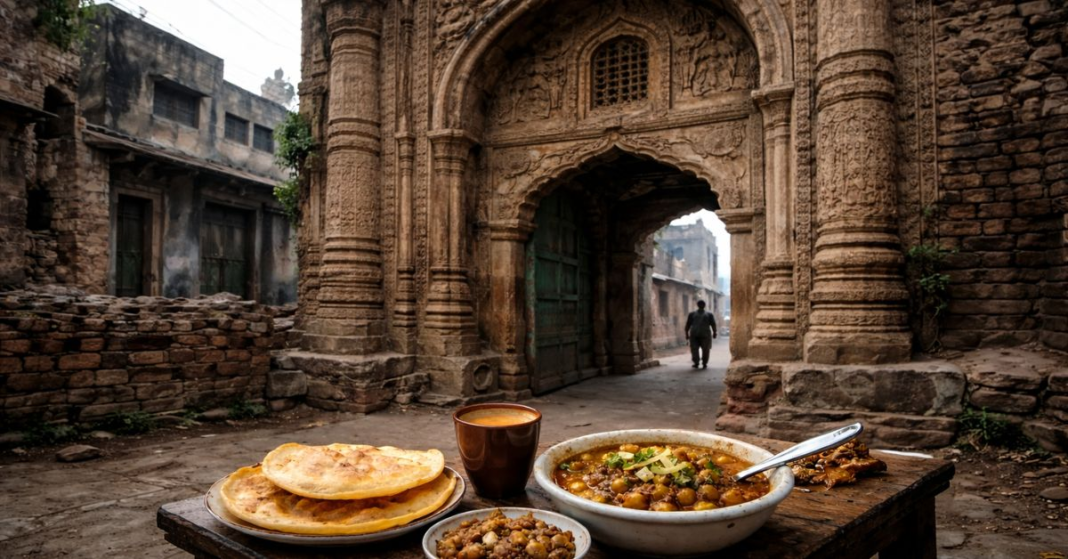

Everyone knows Gujranwala as Pakistan’s “City of Wrestlers” and its industrial heartland the place that churns out steel, sports goods, and legendary grapplers. But pull back the curtain on this gritty Punjab powerhouse, and you’ll find Sikh-era havelis slowly crumbling into poetry, a Jain shrine that predates modern Pakistan by centuries, and street food so good it warrants a dedicated road trip from Lahore. This is not a city that performs for tourists. That’s exactly what makes it worth visiting.
What Are the Best Places to Visit in Gujranwala?
The best places to visit in Gujranwala include Eminabad’s Jain Samadhi, the Old City’s 11 Historic Gates, Haveli Ranjit Singh, the Lodhi Era Mosque, and Gondlanwala Road’s legendary street food strip. For culture, don’t miss the active wrestling akharas near Tehsil Chowk. Together, they form one of Punjab’s most underrated day trips.
1. Eminabad: The Jain Heritage Jewel Pakistan Forgot

Roughly 20 km south of Gujranwala city lies Eminabad, a small town carrying a disproportionately large historical weight. This was once a major settlement on the ancient Grand Trunk Road, and its crown jewel is the Jain Samadhi (Jain Mandir complex), a stunning example of Jain heritage Pakistan rarely talks about.
The samadhi’s carved stone façade, intricate jaali work, and meditative courtyard feel completely out of place with the surrounding farmland which is precisely the point. Jain merchants once thrived here. The silence they left behind is deafening.
Pro tip: Visit in the morning when the light hits the stone carvings. There’s no formal entry fee, but leave a small donation with the caretaker. Ask him about the old baoli (stepwell) nearby; it’s not on any map.
Also in Eminabad: The Lodhi Era Mosque
Walking distance from the Jain complex sits a Lodhi dynasty mosque, pre dating the Mughal empire. Its proportions are modest, its history monumental. This is part of the Gujranwala historical places list that most travel blogs skip entirely.
2. The 11 Old City Gates of Gujranwala
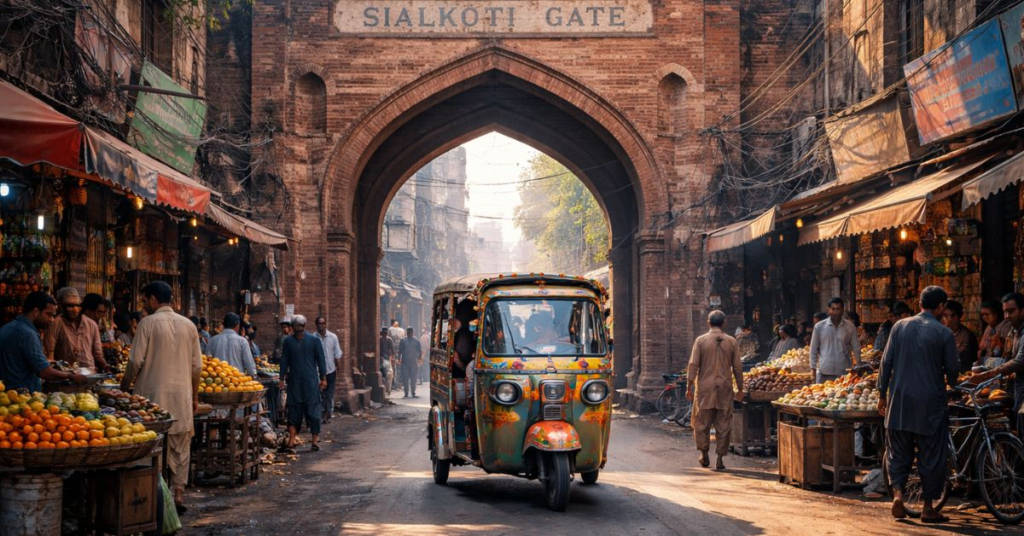
Old Gujranwala was once a walled city, and eleven historic gates (darwazas) still define its historic core or what remains of it. Gates like Delhi Darwaza, Lahori Darwaza, and Mochi Darwaza aren’t tourist attractions with velvet ropes. They’re living infrastructure motorcycles weave through them, vendors crowd their arches, and children play cricket in their shadows.
This is urban archaeology in real time. Walk the route between the gates in the early morning before the bazaar chaos kicks in. The gate inscriptions, the architectural variation between Mughal, Sikh, and colonial era renovations it’s all there if you look.
3. Haveli Ranjit Singh: A Crumbling Masterpiece

Haveli Ranjit Singh sits within the Old City and is among the most significant Sikh-era structures still standing in Pakistani Punjab. The haveli’s frescoed interiors, though faded, retain geometric floral patterns typical of early 19th century Lahori artisan work.
Haveli Ranjit Singh timings: There are no official visiting hours; this is a semi-residential structure. Morning visits (8 to 10 AM) when the families are out work best. Be respectful, introduce yourself, and you’ll likely be shown inside. Locals are proud of it, even if the state isn’t.
4. The Wrestling Culture: Gujranwala’s Living Intangible Heritage

Call this city what you want. The Pahlwan (wrestler) culture of Gujranwala is world-famous for a reason. This is the city that produced legendary names in South Asian wrestling (kushti), and the tradition lives on in active akharas scattered across the old city.
The most accessible is near Tehsil Chowk, arriving between 6 to 8 AM to watch the training sessions. Young men knead the clay pit, senior wrestlers supervise with quiet authority, and the whole scene operates on a code of discipline that feels completely removed from the city outside its walls.
This is one of the hidden gems in Gujranwala that no travel guide adequately covers. Don’t bring a DSLR without asking permission first. A quiet phone video is fine; a tripod setup is an intrusion.
5. The Street Food Circuit: Beyond Shahbaz Tikka
Yes, Shahbaz Tikka is worth it. But stopping there is like visiting Lahore and only eating at one restaurant.
Gondlanwala Road: The Real Gujranwala Food Strip

Gondlanwala Road is the artery of best street food in Gujranwala 2026. The star attractions:
- Channay (chickpea curry): The version here is slow cooked overnight, darker and earthier than Lahore’s, served with raw onion rings and a squeeze of lemon. The karahi shops open by 7 AM and run out before noon. Don’t wait.
- Changa Bread: This is Gujranwala’s own invention: a thick, tandoor-baked bread with a slightly charred, hollow crust. It’s torn open and eaten with daal or channay. You will not find this in Lahore. Buy it fresh, eat it immediately.
- Chirray (Sparrow Fry):
- This one requires a strong stomach and an open mind. Tiny whole-fried sparrows, seasoned with khatai and chili, eaten bones and all. The ritual matters as much as the taste: order at least a dozen, eat them with your hands, with green chutney on the side. A few dhabas near Gol Chowk still serve them; the practice is declining, so consider this a living cultural document.
Gujranwala Doodh Soda
No trip is complete without this local institution chilled sweetened milk mixed with soda water and rose syrup. It sounds wrong. It tastes like belonging.
6. Gujranwala Clock Tower & Tehsil Chowk Area
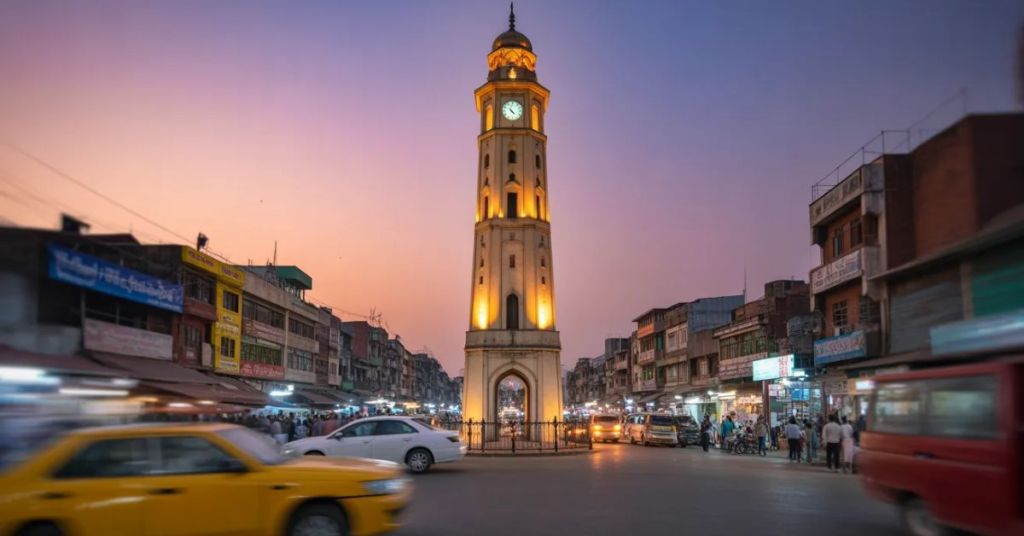
The Clock Tower near Tehsil Chowk anchors the old commercial heart of the city. It’s not spectacular on its own but use it as your orientation point. The surrounding lanes hold traditional brass and copper workshops, bangle sellers, and attar (perfume) merchants operating out of shops unchanged since partition.
The Gujranwala Museum (when open call ahead) holds artifacts from the district’s archaeological sites, including pre Mughal pottery and coins.
7. Akal Garh Fort Ruins
On the outskirts lies Akal Garh, remnants of a Sikh-era fortification used during Ranjit Singh’s campaigns. It’s not restored or maintained. That rawness is the point. Bring water, wear closed shoes, and go with someone who knows the area.
8. Ranjit Singh’s Birthplace Marker (Gujranwala Old City
Few people outside of history circles know this: Maharaja Ranjit Singh, founder of the Sikh Empire was born in Gujranwala in 1780. A marker exists within the Old City near the area locally referred to as Ranjit Singh da Ghar. The structure itself is gone, but the site carries enormous historical gravity for history enthusiasts, especially overseas Pakistanis with Sikh heritage roots tracing back to pre Partition Punjab.
Combine this with the Haveli visit for a focused Sikh era heritage trail that takes about two hours total.
9. Kamoke’s Sufi Shrine Circuit (30 km East)
A short drive east of Gujranwala on the GT Road brings you to Kamoke, a town with several active Sufi dargahs drawing weekly qawaali gatherings on Thursday evenings. The atmosphere, incense, devotional music, men in green shawls is something that photographs can’t capture but memory holds permanently.
This is part of the living Sufi belt running through central Punjab, largely invisible to mainstream travel itineraries. If your trip falls on a Thursday, don’t miss it.
10. Gujranwala Sports Complex & Hockey Legacy
Gujranwala has quietly produced some of Pakistan’s finest field hockey and kabaddi players. The Gujranwala Sports Complex near the main city center isn’t a tourist attraction in the conventional sense but if you visit during an inter-district hockey match or a regional kabaddi tournament, you’ll witness something electric.
Check the Punjab Sports Board calendar before your trip. Tickets are nominal, crowds are passionate, and this is the kind of authentic local experience that travel writers keep trying to manufacture elsewhere.
11. Hafizabad Road Pottery Villages
Drive roughly 25 km northwest toward Hafizabad and you’ll pass through villages where traditional blue pottery and terracotta craft has been practiced for generations. Unlike Multan’s commercialized pottery scene, these workshops are raw and working, not set up for visitors.
Pull over, introduce yourself, and you’ll likely be invited in to watch. Prices for hand-thrown pieces are a fraction of what you’d pay in a Lahore boutique. This is one of the most authentic hidden gems in Gujranwala’s surrounding district.
12. Chenab Canal Bund (Evening Walk)
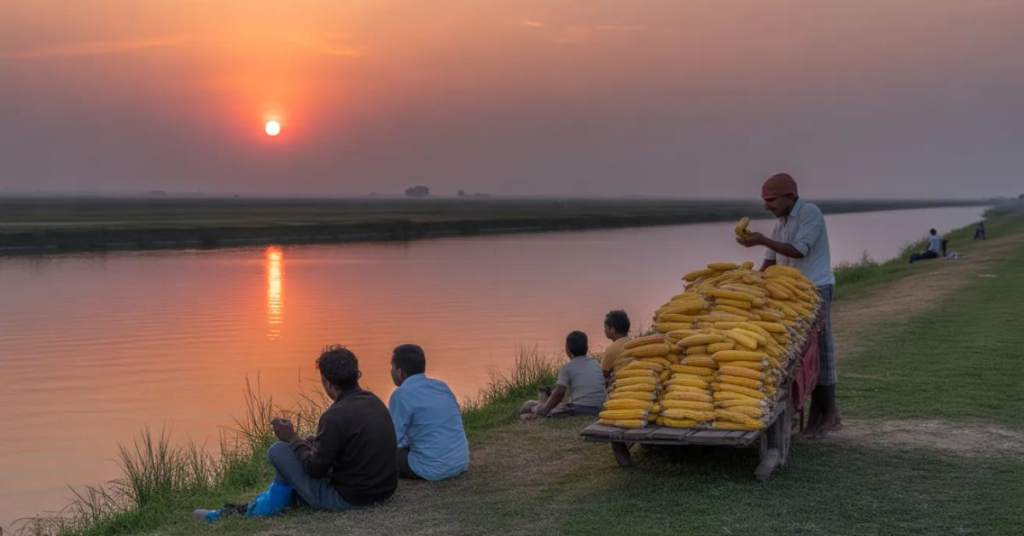
For a quiet exhale after a day of dense old-city exploration, the Chenab Canal embankment on the city’s outskirts is where Gujranwala goes to breathe. Families set up dastarkhan, vendors sell roasted corn and ganna (sugarcane juice), and the light over the water at dusk is genuinely beautiful.
No entry fee. No history lesson required. Just Punjab doing what Punjab does best finding peace near water.
13. Wazirabad: The City of Cutlery (20 km North)
Technically its own city, Wazirabad sits just 20 km north and is worth folding into a Gujranwala day trip. It is Pakistan’s cutlery capital, surgical instruments, knives, and scissors manufactured here are exported globally. The wholesale cutlery bazaars near the main chowk are a sensory overload of gleaming steel, and you can pick up hand-forged kitchen knives at prices that will make you regret every online order you’ve placed.
Combine with a GT Road drive and make it a half-day extension.
The Perfect One-Day Gujranwala Itinerary
| Time | Activity | Location |
| 6:30 AM | Wrestling akhara training session | Near Tehsil Chowk |
| 8:00 AM | Channay + Changa Bread breakfast | Gondlanwala Road Dhabas |
| 9:00 AM | Ranjit Singh birthplace marker | Old City (Ranjit Singh da Ghar area) |
| 9:30 AM | Walk the Old City Gates route | Delhi Darwaza → Lahori Darwaza loop |
| 11:00 AM | Haveli Ranjit Singh interior visit | Old City (ask locals for exact lane) |
| 12:00 PM | Clock Tower bazaar & copper workshops | Tehsil Chowk lanes |
| 1:30 PM | Drive to Eminabad | 20 km south via GT Road |
| 2:00 PM | Jain Samadhi + Lodhi Mosque | Eminabad town center |
| 4:00 PM | Drive back, Doodh Soda stop | Gol Chowk area |
| 4:30 PM | Chenab Canal Bund evening walk | City outskirts |
| 6:00 PM | Shahbaz Tikka dinner | Main GT Road strip |
| 7:30 PM | Chirray tasting (optional) + Kamoke dargah if Thursday | Gol Chowk / Kamoke (30 km east) |
Final Verdict
Gujranwala will not flatter you with Instagram-ready monuments or tourist-facing infrastructure. It will, however, show you a slice of Punjab that Lahore sold to boutique hotels and Islamabad never had to begin with. The Jain heritage, the wrestler culture, the pre Mughal architecture, and the food this is a city still living inside its own history. Come with curiosity, eat with courage, and leave with the distinct feeling that you found something most people drove past on the motorway.
Frequently Asked Questions
Q1: Is Gujranwala safe for tourists in 2026?
Yes. Gujranwala is a relatively safe city for domestic and overseas Pakistani visitors. Standard urban precautions apply: keep valuables secure in crowded bazaars, avoid isolated areas after dark, and travel with a local contact if visiting the Old City’s inner lanes for the first time.
Q2: What is the best time to visit Gujranwala?
October to March is ideal. Punjab winters are crisp, the food tastes better outdoors, and the Old City’s walking routes are manageable. Summer (May to August) is brutal 40°C+ temperatures make daytime exploration miserable.
Q3: How far is Gujranwala from Lahore, and how do I get there?
Gujranwala is approximately 80 km north of Lahore
roughly 1 to 1.5 hours via the GT Road or M 2 Motorway depending on traffic. Daewoo Express and other bus services run frequent routes from Lahore’s Scheme Morh terminal. A solo car ride via Motorway takes about 55 minutes on a good day.
Q4: Are there entry fees for historical sites in Gujranwala?
Most sites including the Old City Gates, Haveli Ranjit Singh, and the Eminabad complex have no formal entry fees. The Jain Samadhi in Eminabad may have a voluntary caretaker donation box. The Gujranwala Museum charges a nominal fee (typically PKR 20 to 50); confirm current timings before visiting as hours vary seasonally.