
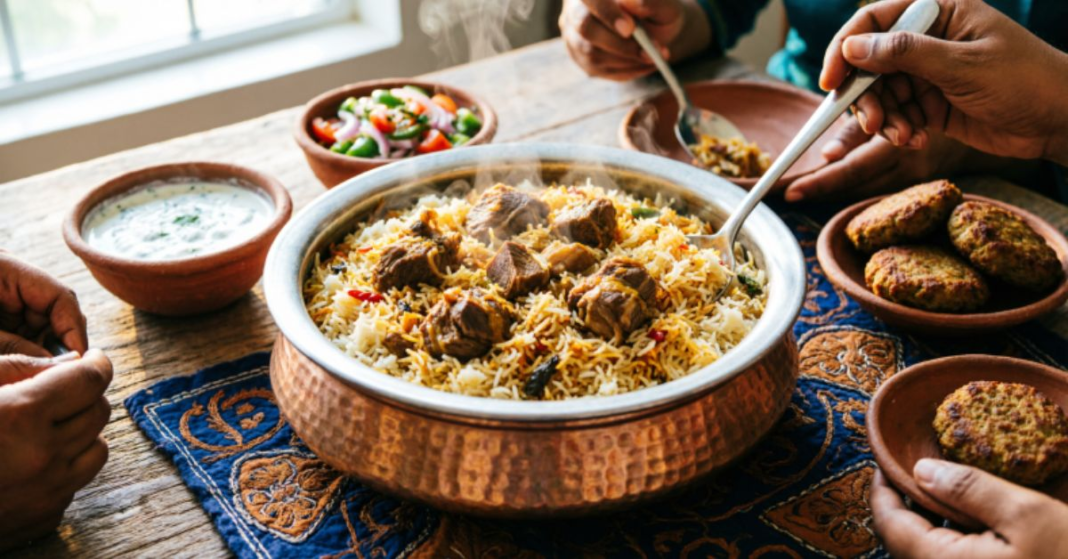

If you’ve ever walked into a Pakistani home and been hit by that unmistakable cloud of Basmati aroma, toasty, floral, and somehow ancient you already understand why rice sits at the heart of our culinary identity. In Pakistan, feeding a guest isn’t a courtesy. It’s a declaration. Mehmaan Nawazi, the sacred art of hospitality demands a table that commands respect, and nothing commands respect quite like a perfectly layered biryani or a glistening Yakhni Pulao slow-cooked in the morning.
Furthermore, for the overseas Pakistani staring at a pot of rice at 11 PM, trying to replicate their mother’s kitchen in Manchester or Houston, the stakes feel intensely personal. Consequently, this guide goes beyond recipes. It breaks down the grain science, the regional secrets, and the technical troubleshooting that most cooking channels simply skip. Whether you’re a seasoned home chef or a Gen Z beginner who’s only ever microwaved rice this is the guide you’ve been waiting for.
Quick Answer Box: How to Cook Perfect Pakistani Rice?
Wash the rice 3 to 4 times until the water runs clear. Soak for a minimum of 30 minutes in cold water (this activates starch gelatinization and prevents breakage). Use a 1:1.5 rice to-water ratio for the stovetop. Bring to a full boil, then reduce to the lowest heat, cover tightly, and steam (dum) for 15 minutes. Never lift the lid early.
The Science of the Grain: Why Your Rice Variety Changes Everything

Most home cooks treat all Basmati the same. That’s the first mistake. In reality, the variety, age, and processing method of your rice are the single biggest predictors of whether your dish turns out perfectly elongated and separate or stuck together in a starchy mess.
Understanding 1121 Kainat Basmati: The Aging Process
1121 Kainat Basmati is the gold standard of Pakistani long-grain rice, and its superiority comes down to one underappreciated process: aging. Freshly harvested Basmati has high moisture content, making grains sticky and prone to breaking. However, when rice is aged for 12 to 24 months in controlled storage, three key changes occur:
- Moisture reduction drops from roughly 14% to below 10%, resulting in firmer, more resilient grains.
- Starch crystallization increases, meaning the grain holds its structure during boiling rather than bloating and bursting.
- The 2-Acetyl-1-Pyrroline compound responsible for that signature nutty aroma intensifies significantly with age.
As a result, aged 1121 Basmati absorbs flavors from your masala or yakhni far more efficiently without turning to mush. Specifically, this is why authentic restaurant-style biryani tastes fundamentally different from home attempts using fresh or budget rice.
Basmati vs. Sella (Parboiled): Which Should You Use?

This is one of the most common points of confusion in Pakistani cooking. Here’s a direct comparison:
| Parameter | Basmati (Raw/Aged) | Sella (Parboiled Basmati) |
| Aroma | Intensely floral, nutty | Mild, slightly earthy |
| Texture | Fluffy, light, separates easily | Firmer, more resilient, slightly chewy |
| Best For | Yakhni Pulao, White Rice, Zarda | Biryani (dum method), Karahi Rice |
| Soaking Time | 30 minutes minimum | 1–2 hours recommended |
| Breakage Risk | Higher if overcooked | Significantly lower |
| Color | Bright white | Golden/cream tint |
The bottom line: Use Sella for biryani that will sit on dum for an extended period its parboiling process prevents over-absorption and collapse. Conversely, use aged raw Basmati where delicacy and aroma are the priority, like Yakhni Pulao.
The Hierarchy of Pakistani Rice Dishes: From Everyday to Ceremonial
Pakistani rice dishes exist on a spectrum. Furthermore, understanding where each dish sits and why helps you make smarter decisions about technique, occasion, and effort.
Biryani: The National Obsession, Broken Down by Region

Biryani is not a single dish. It is a family of dishes that vary dramatically by region, and the differences are not cosmetic.
Sindhi Biryani is characterized by its use of dried plums (aloo bukhara), potatoes, and a vibrant tomato-onion gravy that is neither shy about spice level nor tartness. The masala-to-rice ratio leans heavier on masala, creating distinct layers of deeply flavored gravy beneath the rice. Additionally, Sindhi Biryani almost always includes yogurt in the marination, which tenderizes the meat and contributes a gentle sourness that balances the heat.
Bombay Biryani, on the other hand, arrives with a sweeter aromatic profile. It incorporates fried potatoes, kewra water, and dried apricots, creating a layered sweetness absent from its Sindhi counterpart. The spice level is comparatively moderate, and the color achieved through saffron or yellow food coloring leans toward a celebratory golden hue.
The Dum is the Deal-Breaker. Both styles rely on the dum method sealing the pot with dough or a heavy lid and cooking on low heat so steam has nowhere to escape. This slow internal pressurization creates the signature moist grain that still separates at the touch of a fork. Consequently, skipping dum is the single most common reason home biryani fails to live up to memory.
Yakhni Pulao: The Underdog That Deserves More Respect
Yakhni Pulao is frequently dismissed as “the simple one,” but that assessment is deeply unfair. In fact, a well-made Yakhni Pulao demands more precision than biryani, because it has nowhere to hide behind bold masala.
The soul of Yakhni Pulao is the potli (spice bouquet) , a muslin cloth packed with black cardamom, bay leaves, mace, star anise, and fennel seeds that simmers in meat stock for at least an hour. This technique extracts aromatic oils without releasing bitter compounds that come from directly frying whole spices. Furthermore, the resulting yakhni should taste like a sophisticated, deeply savory broth before a single grain of rice ever touches it. The rice then cooks in this stock at a 1:1.25 ratio, resulting in grains that carry flavor throughout not just on the surface.
Zarda vs. Mutanjan: The Sweet Rice Divide
These two are frequently confused, but they are categorically different dishes.
- Zarda is a festive sweet rice colored with saffron, sweetened with sugar, and garnished with khoya, almonds, and raisins. Cooked rice is dressed with a saffron-sugar syrup and served as dessert at weddings.
- Mutanjan, however, is a Mughal-era ceremonial dish of considerably greater complexity. It combines sweetened rice with small pieces of cooked lamb, creating a sweet-savory hybrid historically reserved for royal banquets. The spicing includes rosewater and kewra with a carefully calibrated sugar level. As a result, Mutanjan takes significantly more skill to balance correctly.
Hidden Regional Gems: The Rice Dishes Nobody Talks About

Pakistan’s regional food diversity is severely underrepresented in mainstream food content. However, some of the country’s most remarkable rice preparations come from areas that rarely make it to a YouTube thumbnail.
Tabaq Zeera (Kashmir): Rice That Smells Like a Forest
Tabaq Zeera is a minimalist Kashmiri rice dish built around black cumin (kala zeera) botanically distinct from regular cumin, with a dramatically earthier, more resinous, and almost smoky flavor. The rice cooks in a light lamb or chicken stock, then finishes with a tarka of kala zeera bloomed in ghee. The result is a plate that tastes far more complex than its ingredient list suggests, specifically, the kind of dish that makes you pause mid-bite.
Banni Pulao (Sindh/Kutch): The Buffalo Milk Rice
Banni Pulao comes from the Banni grasslands of Sindh and Kutch, a region famous for its buffalo herders. Consequently, the dish reflects its geography: Basmati rice cooked in a stock made from buffalo milk thinned with water, alongside dried local herbs and minimally spiced slow-cooked beef. The result is an extraordinarily rich, subtly sweet rice with a creaminess that no amount of regular water can replicate and it remains almost entirely unknown outside its region.
Tarka Rice: The Breakfast Hero

In much of rural Punjab and urban Karachi alike, leftover cooked rice is transformed every morning into Tarka Rice, a humble but intensely satisfying breakfast. Day old rice reheats in a heavy pan with a bold tarka of cumin seeds, dried red chilies, garlic, and sometimes an egg cracked directly in. The slightly dried-out texture of leftover rice is an advantage here: it absorbs the hot tarka without becoming mushy. Furthermore, it comes together in under 10 minutes, making it the most practical rice dish in the Pakistani culinary canon.
Technical Troubleshooting: Fix Your Rice Like a Pro
Problem 1: Mushy “Halwa” Rice The Fan Method
If your rice has turned into a sticky, overcooked mass, the Fan Method is your best immediate recovery:
- Spread the rice across a wide, flat tray immediately.
- Place it in front of a fan or open window on a low setting.
- Moving air rapidly evaporates surface moisture, allowing grains to firm up and separate.
- After 5 8 minutes, fold it back together gently.
However, prevention is better than cure. Mushy rice almost always results from excess water, skipping the soak, or lifting the lid mid cook which dumps condensation back onto the grains.
Problem 2: Breaking Grains The Lemon Juice Trick
Grain breakage has a simple, scientifically sound fix: add ½ teaspoon of lemon juice or white vinegar per cup of dry rice to your boiling water. The mild acid slightly strengthens the outer starch layer of each grain, making it more resistant to the mechanical stress of boiling. As a result, you get significantly fewer broken grains particularly important with aged Basmati, which despite its superior flavor has a slightly more fragile structure than Sella.
Additionally, salt your boiling water generously so it tastes like a light broth. Salt penetrates the grain during cooking, meaning you won’t need to over-compensate with heavily salted masala later.
Shopping Guide: Brands Worth Your Money
Choosing the right brand is just as important as technique. Here’s where to invest:
- Guard Rice: The most reliable aged Basmati brand available both in Pakistan and through international Pakistani grocery networks. Their 1121 grade is authentic and well-controlled, excellent for pulao and white rice.
- Falak Rice: The preferred choice specifically for biryani, owing to consistently long grain length and a reliable Sella variety. Falak is widely available in UK and UAE diaspora markets.
- Mughal Rice: A heritage brand that punches above its price point for everyday cooking. Their Basmati is a solid performer for Tarka Rice and daily chawal. Furthermore, Mughal’s packaging indicates that the aging period always chooses the oldest batch on the shelf.
Pro tip: At international Pakistani grocery stores, always check the harvest year on the bag. Rice labeled 2022 harvest, purchased in 2025, has had three years of natural aging and it will cook and taste noticeably better than the current season’s batch.
Conclusion: Every Great Pakistani Rice Dish Ends the Same Way
Strip back any dish in this guide, the Sindhi Biryani, the Banni Pulao, the Yakhni Pulao with its carefully built potli and they all arrive at the same final moment: the dum. That quiet, sealed period where heat, steam, and time do what no additional ingredient ever could. The art of dum is, fundamentally, the art of restraint knowing when to stop intervening and trust the process.
The grain science matters. The brand matters. The soaking time matters. But ultimately, the cook who seals the pot, turns the flame to its lowest setting, and walks away is the one whose table people talk about for years.
Master the dum. Everything else is preparation.
FAQs: Your Most Specific Questions, Answered
Q1: What is the “One Knuckle Rule” for water measurement?
Place your fingertip on top of rinsed rice in the pot and add water until it reaches the first knuckle joint approximately 1 inch above the rice surface. This approximates the 1:1.5 ratio in most standard pots. However, wider pots require slightly more water due to greater surface evaporation. Consequently, a fixed ratio with a measuring cup is more reliable for beginners.
Q2: How do I fix over salted rice?
Place raw potato slices on top of the rice before sealing for dum. The potato absorbs excess salt during steaming, removing and discarding it after 10 minutes. Additionally, serving with unseasoned plain yogurt (raita without added salt) neutralizes the perception of saltiness at the table.
Q3: Why does my Basmati never elongate like restaurant rice?
Two reasons, almost always: insufficient soaking and insufficient boiling water. Restaurant kitchens use large, rolling boils in deep pots with 4 to 5x the water volume. Grains have room to expand freely without crowding. At home, use your largest pot and don’t be conservative with boiling water. You drain it anyway.
Q4: Can I use a rice cooker for Pakistani-style rice?
Yes, with one modification. For biryani, switch the cooker to “warm” mode (not cook) after the initial cycle completes; this replicates a gentle dum environment. However, for Yakhni Pulao where stock must absorb at a precise ratio, stovetop is significantly more controllable and strongly recommended.
Q5: What is the correct water ratio for Sella (parboiled) rice?
Sella requires more water than raw Basmati: use a 1:2 ratio. Furthermore, because Sella has already been partially cooked during parboiling, it needs longer soaking (1 to 2 hours) and slightly longer cooking time on low heat to fully hydrate and achieve that firm-yet-cooked-through texture ideal for biryani.