

Buying a wallet in Pakistan means navigating fake leather scams on Instagram, currency sizes that break imported designs, and CNIC slots that are too small. This guide cuts through all of it with brand comparisons, material grades, price breakdowns, and community-sourced pain points from r/Pakistan and Quora.
Quick Answer Box
- Best Overall: Jafferjees full-grain bifold fits Pakistani notes, lasts 10+ years.
- Best Budget: HUB Leather (Rs. 1,500 to 2,500) reliable stitching, great value.
- Best Slim: DAB Leather minimalist RFID-protected, fits 6–8 cards.
- Best Gift: M. Jafferjees premium range is a separate brand from Jafferjees, both legitimate.
- Avoid: Instagram “genuine leather” wallets under Rs. 800 with no brand address.
- Must Check: Does it fit a 170mm Pakistani note? If the listing is silent, skip it.
Brand Comparison Table
| Brand | Price (PKR) | Material | Fits Pak Notes? | RFID? | Best For |
| Jafferjees | 4,500 12,000 | Full-Grain / Top-Grain | Yes | Select Models | Gifting, professionals |
| M. Jafferjees | 3,500 10,000 | Top-Grain | Yes | Select Models | Modern + heritage style |
| HUB Leather | 1,500 3,500 | Top-Grain | Yes | No | Budget buyers |
| DAB Leather | 2,000 5,000 | Top-Grain / Slim | Yes (folded) | Yes | Minimalists, card users |
| Saddler Pakistan | 3,000 7,000 | Full-Grain | Yes | No | Rugged daily use |
| Instagram Dropships | 400 900 | Bonded/PU Leather | Sometimes | No | Avoid |
The Rs. 5,000 Note Problem

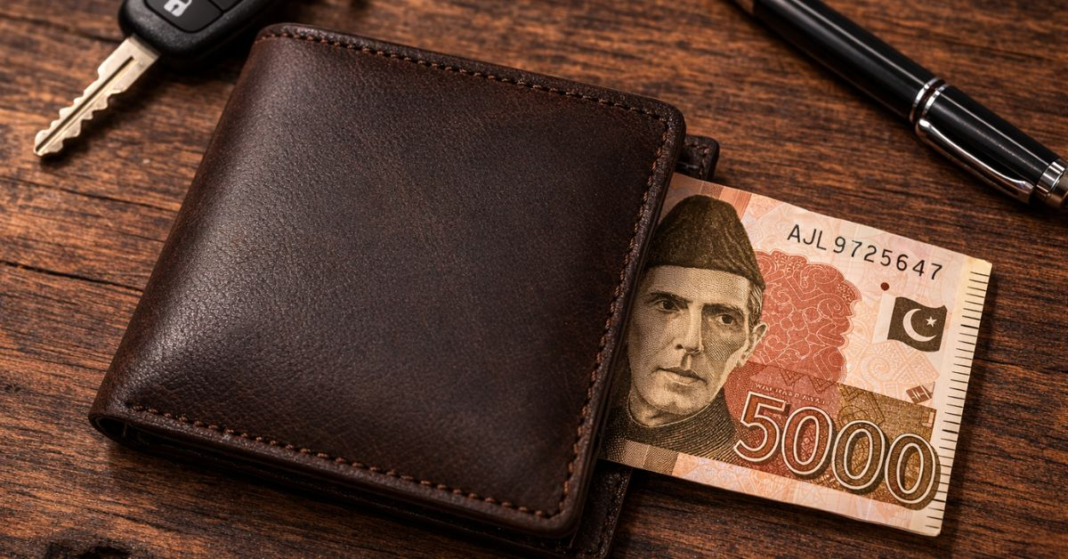
The primary reason international wallets fail in Pakistan is that a standard Rs. 5,000 note measures 170mm x 73mm, while US-designed wallets are capped at 156mm, a 14mm gap that forces your note to fold or stick out entirely.
Brands like Bellroy, Ridge, and Secrid are engineered around the US Dollar format. They physically cannot hold an unfolded Pakistani high-denomination note. This is the single most reported complaint in r/Pakistan wallet threads, with buyers describing the experience as feeling “cheated” after spending Rs. 8,000 to 15,000 on an imported wallet.
Pakistani-made wallets from Jafferjees, HUB, and Saddler are designed around local currency dimensions. Before buying any wallet local or imported confirm: does the note compartment fit 170mm+? If the listing does not state this, treat it as a no and move on.
Furthermore, this is not just about high-denomination notes. The Rs. 1,000 note also exceeds international wallet dimensions. If you regularly carry mixed denominations, note length compatibility is non-negotiable, not a bonus feature.
Why “Genuine Leather” Is a Marketing Trap

“Genuine leather” is the lowest quality grade of real leather not a quality claim, but a legal minimum that any scrap-bonded product can carry. Here is what the grades actually mean:
- Full-Grain: Entire grain layer intact. Most durable, develops a rich patina over time. Best choice for Pakistan’s humid coastal climate and dusty interior regions.
- Top-Grain: Lightly sanded for a uniform finish. Still high quality and weather-resistant. Used by most reputable Pakistani brands including Jafferjees and HUB Leather.
- Genuine Leather: Scraps bonded with adhesive. Looks fine in product photos. Starts peeling within 6 to 18 months faster in Karachi’s humidity or under Lahore’s summer sun.
- Bonded/PU Leather: A plastic composite, often marketed as “vegan leather” or “premium synthetic.” Cracks in heat, loses shape quickly, and typically fails within two months of daily use.
Pakistan’s climate accelerates the failure of low to grade leather. Coastal humidity, interior dust, and extreme summer heat are all factors that genuine and bonded leather simply cannot survive long-term. Consequently, spending Rs. 500 more to move from genuine to top-grain leather is the highest-return upgrade a buyer can make.
A simple in-store test: bend the wallet corner sharply. Full-grain and top-grain leather flex without creasing. Bonded leather shows a white stress line immediately, the same line that becomes a crack within weeks of daily use.
Rule: If “genuine” is the only leather descriptor in the listing do not buy it.
Jafferjees vs. M. Jafferjees They Are Not the Same Brand

Jafferjees and M. Jafferjees are two separate, independent companies. A common mistake among Pakistani buyers is treating them as one brand or assuming one is a sub-line of the other neither is true. Both have been operating in the Pakistani leather goods market for decades and both carry legitimate reputations.
- Jafferjees classic heritage positioning, traditional bifold and trifold silhouettes, known for gifting and corporate orders. Their full-grain range is considered benchmark quality in the Pakistani market. Best suited for professionals and buyers who want a wallet that signals quality without being flashy.
- M. Jafferjees broader product range, includes contemporary slim designs alongside traditional styles. Slightly more accessible at the entry level, with a strong retail presence in major cities. A better pick for Gen-Z buyers who want modern aesthetics with verified leather quality.
When ordering online, verify you are on the correct brand’s official store or a verified retailer. Both brands have been imitated by low-quality sellers using similar-sounding names to always check for a physical store address and official social media verification before completing any purchase.
Brand Mini-Reviews: Who Should Buy What
Jafferjees
The benchmark for gifting in Pakistan. Full-grain options develop a genuine patina over years of use. Stitching is hand-finished on premium lines. Price is justified if you are buying once and keeping it long-term. Available at their official stores and select department stores nationwide.
M. Jafferjees
Better for buyers who want a choice between classic and contemporary in one brand. Entry-level wallets start lower than Jafferjees, making it accessible for first-time quality leather buyers. Furthermore, their slim bifold options are among the few Pakistani-made designs that work for both formal and casual daily carry.
HUB Leather
The most consistent mid-range option in Pakistan. Top-grain leather, solid stitching, and a note compartment sized for Pakistani currency. Does not have RFID protection, but at Rs. 1,500 to 2,500 it remains the most value-dense wallet on the market for everyday use.
DAB Leather
The go-to for minimalists and card-heavy professionals. RFID blocking is standard across most models. Note that the note compartment requires folding for Rs. 5,000 bills acceptable for users who mostly carry cards and small amounts of cash.
Saddler Pakistan
Full-grain leather at a mid-range price. Built for durability over aesthetics. Ideal for buyers who want a wallet that ages well and does not need to look brand-new. Less refined finish than Jafferjees, but the leather quality is comparable at a lower price point.
The Three Biggest Community Pain Points
These frustrations appear repeatedly across r/Pakistan, local Facebook groups, and Quora wallet discussions:
1. Bulky Pocket
The fix is not a slimmer wallet, it is a better-organized one. A structured bifold with tight card slots and thin top-grain leather holds CNIC, two ATM cards, a driver’s license, and cash without visible bulk. When testing in-store, insert your cards and check resistance if they slide loosely on day one, they will fall out within six months.
2. Instagram Fake Leather Scams
Dropshippers photograph bonded leather wallets with macro lenses and sell them at Rs. 700–900 under “artisan crafted” or “handmade Italian leather” branding. The wallet looks good on delivery. By month three, corners peel and stitching splits.
Instant red flags:
- No physical store address traceable outside Instagram
- Price under Rs. 1,200 for “genuine leather”
- Only professional studio photos no real customer unboxing images
- Account age under one year with a high follower-to-post ratio
- No COD option or buyer protection policy stated
Always buy from brands with a verifiable physical presence, a functional returns policy, or an established platform like Daraz with visible ratings history.
3. Not Enough Card Slots Especially for CNIC

A standard Pakistani daily carry requires: CNIC, driver’s license, two ATM cards, health insurance card, office or student card six slots minimum, before counting cash. Most imported slim wallets provide three to four slots total, which is insufficient.
Furthermore, the CNIC (86mm x 54mm) is fractionally larger than a standard credit card (85.6mm x 53.98mm). That small difference causes binding and cracking in tight slots over time. Look for wallets with at least one dedicated ID-width slot.
Future-Proof Features Worth Paying For in 2026
RFID Blocking
RFID skimming is a documented risk in high-traffic Pakistani public spaces markets, malls, and busy transport stops. DAB Leather and select Jafferjees models include RFID-blocking inner lining. The cost premium is Rs. 200–500. For anyone carrying NFC-enabled bank cards, it is a rational upgrade.
AirTag / GPS Tracker Slot
A dedicated thin pocket for an Apple AirTag or similar Bluetooth tracker adds no visible bulk and provides real recovery capability. Useful in high-theft environments like busy bazaars and crowded public transport.
Pull-Tab Card Access
A fabric pull-tab fans out all cards simultaneously for one-handed access. Small feature, high daily-use value especially for professionals managing multiple card-based systems throughout the working day.
Quick Decision Framework
- 5+ cards daily? → Skip slim wallets. Choose a structured bifold with 6+ slots.
- Carry cash regularly? → Confirm 170mm+ note compartment. Non-negotiable.
- Buying as a gift? → Jafferjees or M. Jafferjees for premium packaging and verified brand trust.
- Budget under Rs. 1,500? → HUB Leather or a verified local craftsman with physical presence.
- Rs. 2,000–5,000? → DAB Leather or M. Jafferjees entry range.
- Rs. 5,000+? → Jafferjees full-grain or Saddler Pakistan built to outlast your phone by several upgrade cycles.
Conclusion
The best wallet in Pakistan fits your Rs. 5,000 notes flat, holds six cards without loosening, and uses top-grain or full-grain leather that survives Karachi’s humidity and Lahore’s summer heat without peeling.
For gifting, Jafferjees and M. Jafferjees are the safest and most impressive choice. For daily value, HUB and DAB Leather consistently deliver above their price point. For long-term ownership, invest Rs. 5,000 or more in full-grain leather and buy once rather than replacing every 18 months.
Never trust a wallet under Rs. 800 claiming artisan leather with no verifiable brand behind it. Your back pocket and your Rs. 5,000 notes deserve better.
FAQs
Q1. What is the best wallet brand in Pakistan for gifting?
Jafferjees and M. Jafferjees are the top two choices. Both offer verified leather quality and premium packaging in the Rs. 4,000 to 10,000 range. They are separate, independent brands confirming which store you are ordering from before purchasing.
Q2. Do Bellroy or Ridge wallets work with Pakistani currency?
No. Their note compartments are designed for a maximum of 156mm. Pakistani Rs. 1,000 and Rs. 5,000 notes both exceed this at 170mm. For a slim profile, choose DAB Leather or a local craftsman who explicitly designs for Pakistani currency dimensions.
Q3. How do I identify a fake leather Instagram seller?
Key indicators: price under Rs. 800 for “genuine leather,” no physical store address, studio-only product photos with no real customer content, and a young account with disproportionately high followers. Legitimate brands have traceable addresses, genuine customer reviews with images, and pricing that reflects real material cost.
Q4. How many card slots does a Pakistani wallet need?
Six as a minimum: CNIC, driver’s license, two ATM cards, a health card, and one spare. Additionally, verify that at least one slot accommodates the CNIC at 86mm x 54mm marginally wider than a standard credit card and a common source of cracking in cheaper wallets.
Q5. Is RFID protection worth it in Pakistan?
Yes particularly in Karachi, Lahore, and Islamabad where NFC card usage is growing. Contactless skimming is a documented risk in high-traffic public spaces. The cost premium is Rs. 200 to 500 over standard wallets. Given what your cards can access, it is a rational upgrade.