
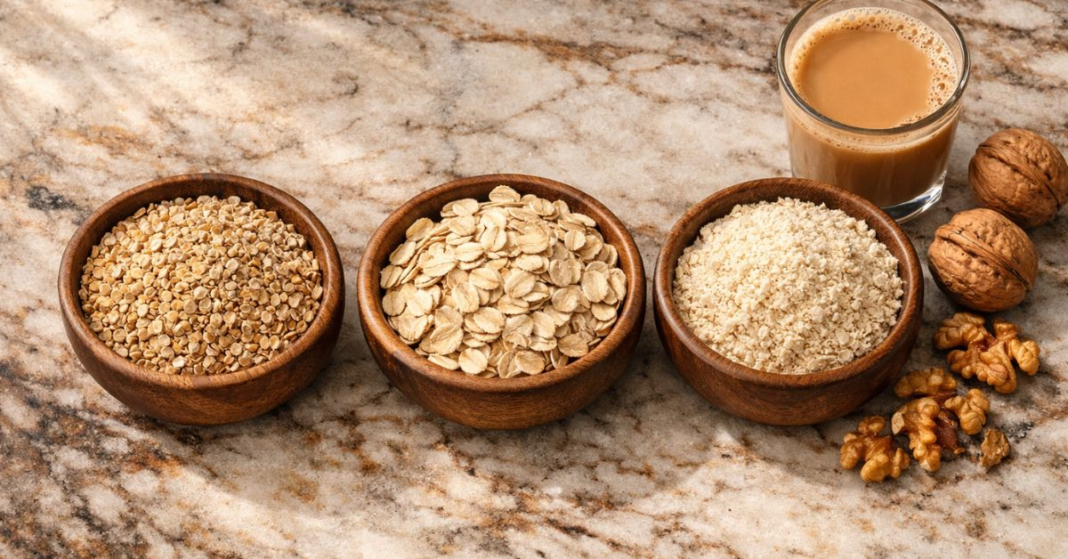

Walk into any superstore in Karachi, Lahore, or Islamabad and you’ll find an entire shelf dedicated to oats. Yet most Pakistanis still grab whatever’s on sale often ending up with a product that either tastes like cardboard or quietly derails their health goals with hidden sugar. The confusion is real: steel cut, rolled, instant, flavored, plain what does any of it actually mean for your body?
This guide is built for the fitness enthusiast tracking macros, the diabetic patient managing blood sugar, and the busy professional who needs a nutritious breakfast in under five minutes. Here’s everything you need to choose the right oats, not just the most popular ones.
Quick Answer Box
Best Overall: Quaker Rolled Oats for quality and availability. Best Budget: Fauji Oats for cost-conscious buyers without major nutritional compromise. Best for Weight Loss: Steel cut oats (Nature’s Own or imported varieties). Avoid: Flavored instant oats like Quaker Strawberry contain up to 12g of added sugar per serving. Always choose plain oats and flavor them yourself.
The Processing Gap: Steel-Cut vs. Rolled vs. Instant Oats

This is where most Pakistanis get it wrong and it genuinely matters for your health outcomes.
Steel-Cut Oats (Least Processed)
Steel-cut oats are whole oat groats chopped into two or three pieces using steel blades. Consequently, they retain the most fiber and have the lowest glycemic index (GI ~42). They take 20 to 30 minutes to cook, which is why most people skip them but for diabetics or anyone managing insulin response, they are the gold standard. Specifically, their coarse texture slows digestion, keeping you full for 4 to 5 hours.
Rolled Oats (Middle Ground)
Rolled oats are steamed and then flattened between rollers. They cook in 5–10 minutes and strike the best balance between nutrition and convenience. Furthermore, their GI (~55) is still considered low-to-medium, making them suitable for most health goals. This is the type most commonly found on Pakistani shelves.
Instant Oats (Most Processed)
Instant oats are pre-cooked, dried, and rolled even thinner. They’re ready in 1 to 2 minutes with boiling water. However, this convenience comes at the cost of a significantly higher GI (~70+), less fiber, and a texture that turns mushy. Plain instant oats are acceptable in a pinch; flavored instant oats are a different story entirely (more on that below).
The “Clean Label” Warning: Hidden Sugars in Flavoured Oats

This is the section the oats industry doesn’t want you to read carefully.
Quaker Strawberry Flavour Oats and Quaker Chocolate Oats are marketed as “healthy breakfast options.” In contrast, a single 40g serving of these products can contain 10 to 13g of added sugar, nearly 3 teaspoons. For a diabetic patient or someone on a weight-loss plan, that’s a significant metabolic hit before 9 AM.
Additionally, these products often use artificial flavoring and maltodextrin (a high-GI filler) to achieve their taste profile. Therefore, a simple rule: always buy plain oats rolled or steel-cut and add your own flavor using banana, dates, or a pinch of cinnamon. You’ll get real nutrition instead of a candy-coated health myth.
Top 7 Oat Brands Available in Pakistan: Honest Reviews

1. Quaker Rolled Oats ⭐⭐⭐⭐½
Type: Rolled | Price: ~Rs. 450 to 550 for 500g
The global benchmark for a reason. Quaker’s plain rolled oats have consistent texture, cook evenly, and are widely available at HyperStar, Carrefour, and most kiryana stores.
Pros: Widely available, reliable quality, decent fiber content Cons: Premium price point; flavored variants are sugar traps
Best For: Daily breakfast for fitness enthusiasts and heart patients
2. Fauji Oats ⭐⭐⭐⭐
Type: Rolled | Price: ~Rs. 200 to 280 for 500g
The most common question on Pakistani food forums is “Is Fauji Oats as good as Quaker?” Honestly? For plain rolled oats, the nutritional difference is marginal. Fauji oats are produced locally under controlled conditions and are certified by Pakistan Standards and Quality Control Authority (PSQCA). Specifically, the fiber content and beta-glucan levels are comparable to Quaker at nearly half the price.
Pros: Budget-friendly, widely available, decent nutritional profile Cons: Slightly coarser texture; less consistent batch-to-batch
Best For: Budget-conscious families and daily use
3. Nature’s Own Oats ⭐⭐⭐⭐
Type: Rolled & Steel-Cut variants | Price: ~Rs. 380 to 480 for 500g
Nature’s Own is one of the few brands in Pakistan that offers a genuine steel-cut oat option. Furthermore, their packaging clearly labels processing type to a transparency other brands lack. Available primarily in Lahore and Karachi at specialty health stores and online via Daraz.
Pros: Steel-cut option available, clean label, no artificial additives Cons: Limited availability outside major cities; slightly premium priced
Best For: Diabetics, serious fitness enthusiasts, and clean eaters
4. Mitchell’s Oats ⭐⭐⭐
Type: Rolled | Price: ~Rs. 190 to 240 for 500g
Mitchell’s is a household name in Pakistan, and their oats are competitively priced. However, their nutritional labeling is less detailed than competitors, making it harder to verify beta-glucan content. Additionally, the texture tends to be softer, which may appeal to those who prefer a smoother porridge.
Pros: Very affordable, widely available, soft texture Cons: Minimal nutritional transparency on packaging
Best For: First-time oat users and those on tight budgets
5. Noman’s Oats ⭐⭐⭐
Type: Rolled | Price: ~Rs. 170 to 220 for 500g
A domestic contender that’s gaining shelf space in Punjab supermarkets. Noman’s oats are adequate for basic nutritional needs. In contrast to premium brands, they lack independent quality certifications, but at this price point, they serve as a reasonable entry-level option.
Best For: Budget households, children’s porridge
6. Imported Oats (Bob’s Red Mill, Flahavan’s) ⭐⭐⭐⭐⭐
Type: Steel-Cut & Rolled | Price: ~Rs. 1,200 to 2,500 for 500g–1kg
Available at specialty stores like The Organic Store and online retailers. Bob’s Red Mill steel-cut oats are the gold standard globally. Consequently, they come at a significant price premium that’s hard to justify for daily use. Nevertheless, for those with serious medical requirements (diabetics, PCOS patients), the superior GI control may be worth the investment.
Best For: Medical dietary requirements, premium lifestyle consumers
7. Quaker Instant Oats (Plain) ⭐⭐⭐
Type: Instant | Price: ~Rs. 350 to 420 for 500g
Acceptable when you’re genuinely pressed for time. Plain instant Quaker oats are not nutritionally disastrous; they’re simply a step down from rolled oats in fiber density and satiety. Therefore, use them occasionally, not as your daily staple.
Best For: Emergency breakfasts, travel, office mornings
Oats Brand Comparison Table
| Brand | Type | Price (500g) | GI Level | Best Use Case |
| Quaker Plain | Rolled | Rs. 450 to 550 | Low-Medium | Daily fitness breakfast |
| Fauji | Rolled | Rs. 200 to 280 | Low-Medium | Budget daily use |
| Nature’s Own | Rolled / Steel-Cut | Rs. 380 to 480 | Low (steel-cut) | Diabetics, clean eating |
| Mitchell’s | Rolled | Rs. 190 to 240 | Low-Medium | Beginners, soft texture |
| Noman’s | Rolled | Rs. 170 to 220 | Medium | Budget households |
| Bob’s Red Mill | Steel-Cut | Rs. 1,500 to 2,500 | Low | Medical dietary needs |
| Quaker Instant (flavored) | Instant | Rs. 380 to 450 | High | ❌ Avoid |
The Weight Loss Secret: Why Steel-Cut Oats Win for Satiety
If your primary goal is weight management, the type of oat matters more than the brand.
Steel-cut oats trigger a significantly lower insulin response compared to instant varieties. Additionally, their higher resistant starch content feeds gut microbiome bacteria, contributing to better metabolic health over time. Specifically, a 2023 study in the Journal of Nutrition confirmed that intact oat structures (like steel-cut) produce 20% greater satiety hormones (GLP-1) than processed instant oats.
In practical terms: steel-cut oats keep you full until lunch. Instant oats often leave you hungry by 10:30 AM. Therefore, if you’re serious about fat loss or blood sugar control, find Nature’s Own steel-cut or order Bob’s Red Mill online the investment pays off in fewer cravings.
Recipe Hacks: Making Oats Delicious for the Pakistani Palate
“Why do oats taste bland?” This is the most Googled oats complaint in Pakistan. The answer isn’t more sugar. Here’s how to build flavor the smart way:
Savory Masala Oats (5 minutes)

- Cook rolled oats in water or low-fat milk
- Add a tadka of cumin, green chili, and a pinch of turmeric
- Top with a fried egg and fresh coriander
- Result: A high-protein, filling breakfast with zero added sugar
Overnight Banana-Date Oats
- Mix rolled oats with milk and refrigerate overnight
- In the morning, top with 2 Medjool dates (natural sweetness) and half a mashed banana
- Add a sprinkle of chia seeds for extra omega-3
Doodh Patti Oats (Chai-Inspired)
- Cook oats in a 50/50 mix of water and full-fat milk
- Add cardamom powder, a strand of saffron, and 1 tsp of honey
- This works brilliantly for those transitioning from paratha breakfasts
Furthermore, adding protein powder, peanut butter, or Greek yogurt to any of these recipes significantly improves satiety and macronutrient balance.
Final Recommendation
For most Pakistanis: Start with Fauji Rolled Oats for daily use. The nutritional profile is solid and the price is sustainable long-term. For fitness and health-focused users: Upgrade to Quaker Plain Rolled Oats or Nature’s Own Steel-Cut Oats. Strictly avoid: All flavored instant oat variants regardless of brand. The sugar content negates every health benefit you’re seeking.
Oats are one of the most evidence-backed foods for cardiovascular health, blood sugar management, and sustainable weight loss. However, the right oats matter. Make your choice based on your health goal, not the most colorful packaging.
FAQs
Q1: Are oats safe for babies and toddlers in Pakistan?
Plain oats (rolled or instant, not steel-cut) can be introduced to babies from 6 months onward once solid foods begin. Specifically, start with a thin oat porridge cooked in breast milk or formula. Avoid any flavored, sugared, or adult oat products entirely. Always consult your pediatrician before introducing new foods.
Q2: Are any oats available in Pakistan certified gluten-free?
This is a critical question for celiac patients. Oats are naturally gluten-free, but cross-contamination during processing is a serious risk. None of the locally produced brands (Fauji, Mitchell’s, Noman’s) are certified gluten-free. Consequently, celiac patients should only use certified imported options like Bob’s Red Mill Gluten-Free Oats, available on Daraz or specialty health stores.
Q3: Which oats are best for diabetic patients in Pakistan?
Steel-cut oats are the clear recommendation, specifically Nature’s Own Steel-Cut or imported varieties. Their low glycemic index (~42) and high beta-glucan fiber content help moderate post-meal blood sugar spikes. Additionally, portion size matters: stick to 40–50g dry weight per serving and pair with protein (egg, yogurt) to further slow glucose absorption.
Q4: Where can I buy steel-cut oats in Pakistan?
Steel-cut oats are genuinely hard to find outside major cities; this is a legitimate market gap. Currently, Nature’s Own steel-cut oats are stocked at selected health stores in Lahore and Karachi. Additionally, Daraz.pk carries both local and imported options. Search for “steel cut oats Daraz” or check The Organic Store branches in Lahore. Availability in smaller cities remains limited.
Q5: Is the price difference between Fauji and Quaker worth it?
For plain rolled oats used in standard cooking, the nutritional gap is marginal. Fauji is genuinely good value. However, if you’re eating oats specifically for therapeutic reasons (cholesterol management, diabetes control), Quaker’s more consistent beta-glucan content and international quality standards offer added assurance. Therefore, healthy individuals on a budget: choose Fauji. Medical dietary users: invest in Quaker or Nature’s Own.